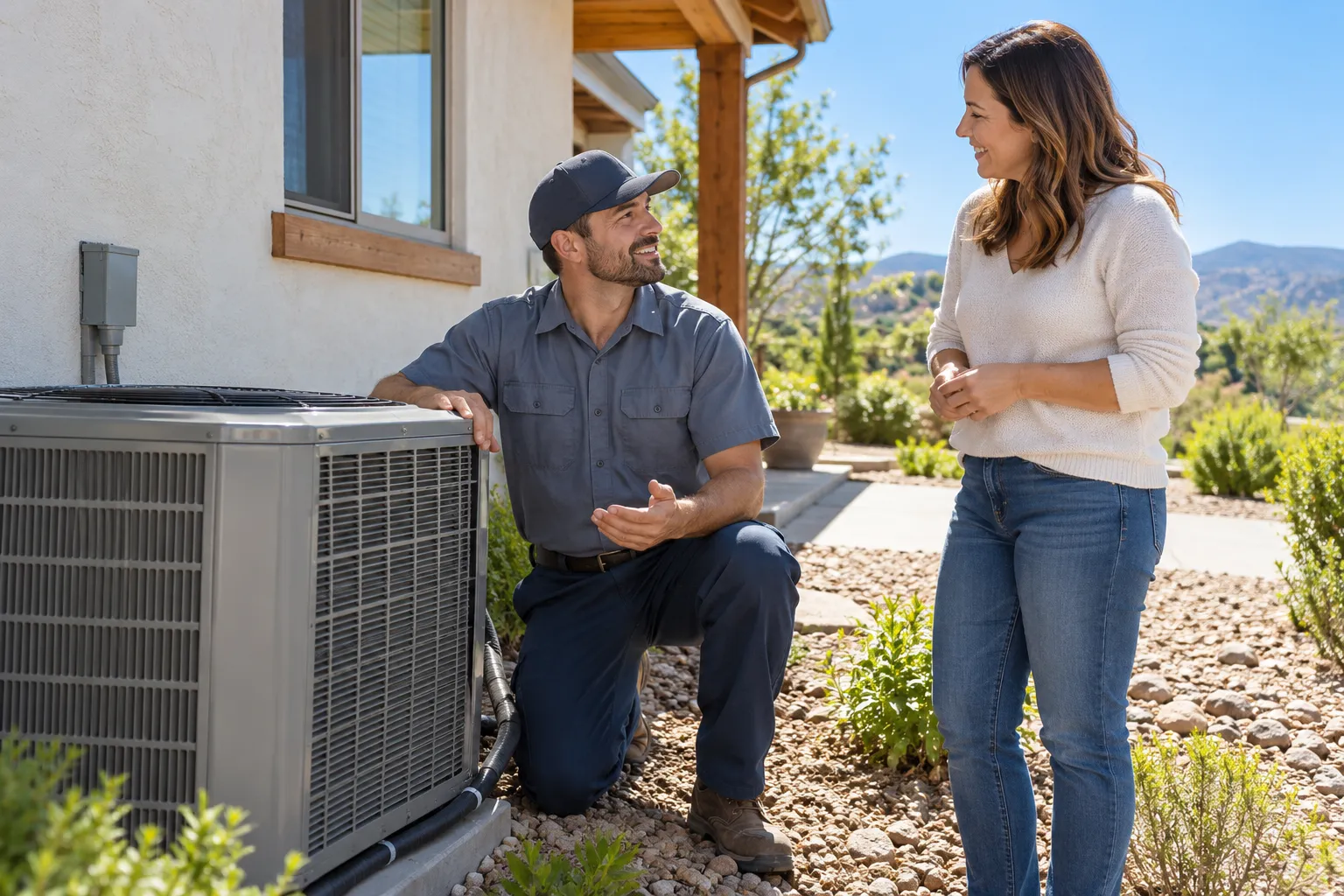
How do I choose a good HVAC repair provider?
Start with safety and paperwork. Do ask whether the provider is licensed and insured where you live. Do ask for a written quote before work starts. Do not pick a provider who pushes you to sign on the spot. Ask what the repair covers and what upkeep should follow. Goldencarefully Heating & Air is a referral service, so the providers in our network are independent businesses. You make the final choice.
How much does AC or furnace repair usually cost?
Costs vary by job. In the U.S., small fixes like a capacitor or igniter often run from about $150 to $600. Larger parts, such as a blower motor or compressor, can reach well over $1,000. Age of the system, part availability and access all change the price. Do ask for a written quote that lists parts and labor. Compare it before you agree to anything.
Will homeowners insurance pay for HVAC repair?
Sometimes, but not always. Some policies may cover sudden damage, such as a hail strike on an outdoor unit or a fire. Wear and tear, age and missed upkeep are usually not covered. Check your policy and ask your insurer before work begins. Providers can often help document damage for a claim, with photos and a written description of what they found.
What can I safely check myself before calling a provider?
Do check the thermostat settings and batteries. Do check that the breaker has not tripped. Do replace a clogged filter. Do not open the furnace cabinet, touch gas lines or handle wiring. Do not keep resetting a unit that keeps shutting off. If you smell gas, leave the home and contact your gas utility or emergency services.
When is it a true emergency?
Treat these as urgent: a gas smell, a burning smell, sparks, smoke, or a carbon monoxide alarm. Leave the home first. Then contact the right emergency service. For a dead furnace in freezing weather or a failed AC in extreme heat, Request a callback to check provider availability.
Should I repair my system or replace it?
Age and repair history matter most. Many systems last roughly 10 to 20 years, depending on type and care. If a repair costs close to half the price of a new unit, replacement may make more sense. Older homes add a twist: old ductwork may not suit a new unit. Ask the provider to explain both options in writing.
What upkeep should I do after the repair?
Repair, then protect. Change filters on the schedule the provider suggests. Keep the outdoor unit clear of weeds, leaves and snow. In dry, sunny climates, dust builds up fast, so check filters often. Book a yearly tune-up for heating and cooling gear. Ask the provider what wore out and how to slow that wear next time.
Does an older home change how HVAC work is done?
Yes. Know your home's age. Older houses may have tight spaces, aging ductwork, past patch repairs or hidden surprises behind walls. A careful provider will look before quoting. Do share any known past work. Do not assume a new unit will simply drop in. Ask the provider to check duct size, venting and electrical capacity.